


“What Happens to Total Health Care Spending When Acupuncture Becomes Part of a Pain Management Plan?”
Blog post inspired by the National University of Health Science's post:

When people compare acupuncture to conventional care, they often start with the wrong question: “How much does one acupuncture session cost?”
That question matters, especially for patients paying out of pocket. But it does not capture the full cost of care. A better question is, “What happens to total health care spending when acupuncture becomes part of a pain management plan?”
Total spending can include:
Primary care visits
Specialist visits
Physical therapy or other outpatient care
Prescription medications
Imaging and follow-up testing
Procedures
Emergency or urgent visits when pain flares
For chronic low back pain, these costs can repeat for months or years. A patient may try one medication, then another. They may rotate between providers. They may need care for medication side effects. They may seek help during flare-ups when pain interrupts sleep, movement, or work.
While acupuncture does not replace every type of care and is not a cure-all, it can fit into a broader plan that aims to reduce pain, improve function, and lower reliance on higher-cost services.
A 2020 study found that adults with chronic low back pain who used acupuncture along with other complementary and alternative medicine, often called CAM, had significantly lower health care expenditures. The savings were linked in part to lower prescription medication costs and lower outpatient expenses.
This discovery is important because chronic pain is rarely just one bill. It can lead to repeat appointments, medication refills, missed work, referrals, and ongoing care that adds up over time. If acupuncture helps some patients manage pain with fewer prescriptions or fewer outpatient visits, the cost effect can reach well beyond the treatment room.
That is where the 2020 study becomes useful. It did not simply ask whether acupuncture has a fee. It looked at spending patterns among adults with chronic low back pain who used CAM, including acupuncture. The researchers found that these adults had lower overall health care expenditures, with lower prescription medication and outpatient costs standing out as likely contributors.
That finding supports a practical idea: the most affordable care is not always the cheapest single service. Sometimes it is the care plan that reduces repeat spending.
Prescription spending is one of the clearest places costs can fall
Prescription drugs can be essential. For many conditions, they are the right tool. Still, chronic pain often creates a pattern of ongoing medication use, and that can carry financial and medical trade-offs.
Pain medications may include over-the-counter drugs, muscle relaxants, anti-inflammatory medications, nerve pain medications, and in some cases opioids. Some are inexpensive. Others are costly, especially when taken long term or paired with visits for refills, monitoring, or side effect management.
The 2020 study found that adult CAM users had significantly lower prescription medication expenses. That does not prove acupuncture alone caused every dollar of savings. CAM includes a range of care approaches, and people who use CAM may differ from those who do not. Still, the result points to an important pattern.
When patients have more non-drug tools for pain management, they may need fewer medications or use them less often under medical guidance.
For chronic low back pain, acupuncture may help by supporting pain modulation, reducing muscle tension, and encouraging the body’s own pain-regulating responses. Patients often use it alongside movement, stretching, physical therapy, sleep changes, heat, massage, or other clinician-recommended strategies.
The financial effect can show up in several ways:
Fewer prescription refills
Less need to switch medications due to limited relief
Fewer visits focused only on medication management
Lower spending related to side effects or complications
Reduced demand for more intensive outpatient services
None of this means patients should stop a prescription on their own. Any medication change should happen with a licensed clinician. But acupuncture may give some patients another path to pain relief that reduces dependence on medication-centered care.
A lower-cost pain plan is not just about paying less for treatment. It is about reducing the number of expensive steps needed to get through daily life.
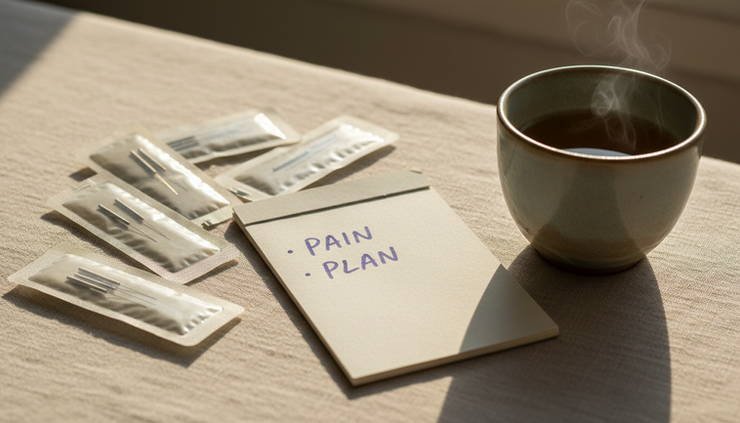
Outpatient costs can drop when pain is managed earlier
Outpatient care includes many services that do not require a hospital stay. For chronic low back pain, that can mean office visits, therapy appointments, specialist consultations, imaging follow-ups, injections, and other non-hospital services.
These costs can climb quickly because chronic pain tends to send people back into the system again and again. Pain improves for a while, then returns. A flare-up leads to another visit. A provider recommends a new referral. The patient tries a new option, waits, then starts the process over.
The 2020 study found that CAM users had significantly lower outpatient expenses. That matters because outpatient care is where many chronic pain costs accumulate.
Acupuncture may help reduce outpatient spending when it becomes part of earlier, conservative care. Instead of waiting until pain has become severe or long-running, clinicians and patients may use acupuncture as one part of a plan to manage symptoms before they require more visits or more complex treatment.
A practical care plan might include:
Acupuncture for pain management
Gentle movement or therapeutic exercise
Education on posture and activity pacing
Sleep support
Stress reduction
Medical evaluation when symptoms change or worsen
This kind of plan can help patients avoid bouncing from one appointment to the next without meaningful progress. The goal is not to avoid conventional medicine. The goal is to use the right level of care at the right time.
There is also a behavioral piece. Acupuncture appointments often give patients a regular rhythm for checking in with their bodies. They may notice what triggers pain, what improves it, and when they need medical attention. Better self-awareness can reduce panic-driven visits for familiar pain patterns, while still leaving room for urgent care when symptoms are serious.
Of course, low back pain sometimes signals a condition that needs medical evaluation. New weakness, numbness, fever, unexplained weight loss, loss of bladder or bowel control, or pain after major trauma should be treated as urgent. Acupuncture belongs in responsible care, not in place of necessary diagnosis.

Insurance coverage is already moving in a favorable direction
One reason acupuncture can feel financially out of reach is inconsistent insurance coverage. Some plans cover it for certain diagnoses. Some require referrals. Some limit the number of visits. Others do not cover it at all.
That uneven coverage creates confusion. It also feeds the belief that acupuncture is always a luxury service paid fully out of pocket.
Recent data tells a more hopeful story. A 2022 study found that insurance coverage for acupuncture rose from 41.1% in 2010 to 2011 to 50.2% in 2018 to 2019. Acupuncture use also increased among respondents, from 0.4% to nearly 0.8%.
Those numbers may still look small, especially the use rate. But the direction matters. More coverage means more patients can afford to try acupuncture. More use means more real-world data, more clinician familiarity, and more pressure for plans to clarify benefits.
This cycle can build slowly:
Research shows potential savings and patient benefit.
Medical professionals make more referrals.
Patients use acupuncture more often.
Insurers see demand and evaluate cost patterns.
Coverage expands when the case becomes stronger.
Acupuncture coverage may grow faster for conditions where evidence and cost concerns overlap. Chronic low back pain is a strong example because it is common, costly, and often treated through repeated outpatient care and medication use.
For insurers, the financial argument is straightforward. If a covered acupuncture benefit reduces spending on prescriptions, specialist visits, or other outpatient services, it may pay for itself or lower costs overall. For patients, coverage can make treatment easier to start and easier to continue long enough to see whether it helps.
Plan design still matters. A benefit with a very high copay or strict visit limit may not be useful. Coverage tied to clear diagnoses, reasonable visit numbers, and qualified practitioners has a better chance of supporting real results.
Why medical referrals may increase in the coming years
Clinicians tend to refer patients when three things are true: the treatment has a reasonable evidence base, the risk profile is acceptable when performed properly, and patients can access it.
Acupuncture is gaining ground on all three fronts.
For chronic low back pain, acupuncture has been studied enough that many clinicians now see it as a legitimate non-drug option for selected patients. It is generally considered low risk when performed by a properly trained and licensed practitioner using sterile needles. Access is also improving as insurance coverage expands.
The opioid crisis changed the way many health systems think about pain care. Providers have become more cautious about relying too heavily on medication alone, especially for chronic non-cancer pain. That shift has created more interest in non-drug options, including acupuncture, physical therapy, behavioral health support, and lifestyle-based care.
Cost pressure adds another reason for referral. Health systems, employers, insurers, and patients all feel the burden of chronic pain spending. A therapy that may reduce prescription and outpatient costs naturally attracts attention.
This does not mean every patient with low back pain should receive acupuncture. Good care still starts with an appropriate evaluation. The cause of pain, symptom severity, medical history, pregnancy status, bleeding risk, and patient preferences all matter.
But it does mean acupuncture may become less of an “alternative” in the everyday sense of the word. It may become a normal part of conservative pain care, especially when the goal is to reduce unnecessary spending while still helping patients function better.

What patients can do to understand the cost picture
Even when research points in a positive direction, individual costs vary. Insurance benefits, local rates, visit frequency, and the reason for treatment all affect what someone pays.
A smart cost review starts before the first appointment. Patients can call their insurance plan and ask clear questions, such as:
Is acupuncture covered for chronic low back pain?
Is a referral required?
Does the plan require a specific provider network?
How many visits are covered each year?
What is the copay, coinsurance, or deductible?
Are there documentation requirements?
It also helps to ask the acupuncture clinic about fees, package policies, cancellation rules, and whether they provide billing documents for possible reimbursement.
The bigger question is whether acupuncture lowers total spending over time. That takes a broader view. A patient tracking costs might compare medication spending, outpatient visits, pain flare-ups, and missed work before and after starting treatment. This does not need to be complicated. A simple notebook or spreadsheet can reveal whether the care plan is reducing repeat expenses.
The most useful results are not only financial. Better sleep, easier movement, fewer pain days, and less stress around symptoms all matter. Cost savings are strongest when care improves daily life while reducing the need for ongoing medical spending.
Acupuncture is not free, and it is not guaranteed to reduce costs for every person. But the research trend is promising. Lower medication expenses, lower outpatient costs, rising insurance coverage, and growing use all point in the same direction: acupuncture may help make chronic pain care more affordable when it is used thoughtfully.
The takeaway is simple. Acupuncture should not be judged only by the price of one visit. For chronic low back pain and similar long-term conditions, the better measure is total cost, including prescriptions, outpatient care, and the cycle of repeat treatment. By that measure, acupuncture is becoming harder for patients, clinicians, and insurers to ignore.
This article is for informational purposes only and is not medical advice. Anyone considering acupuncture for chronic pain should speak with a qualified health professional and choose a licensed practitioner.


Comments